Tenth
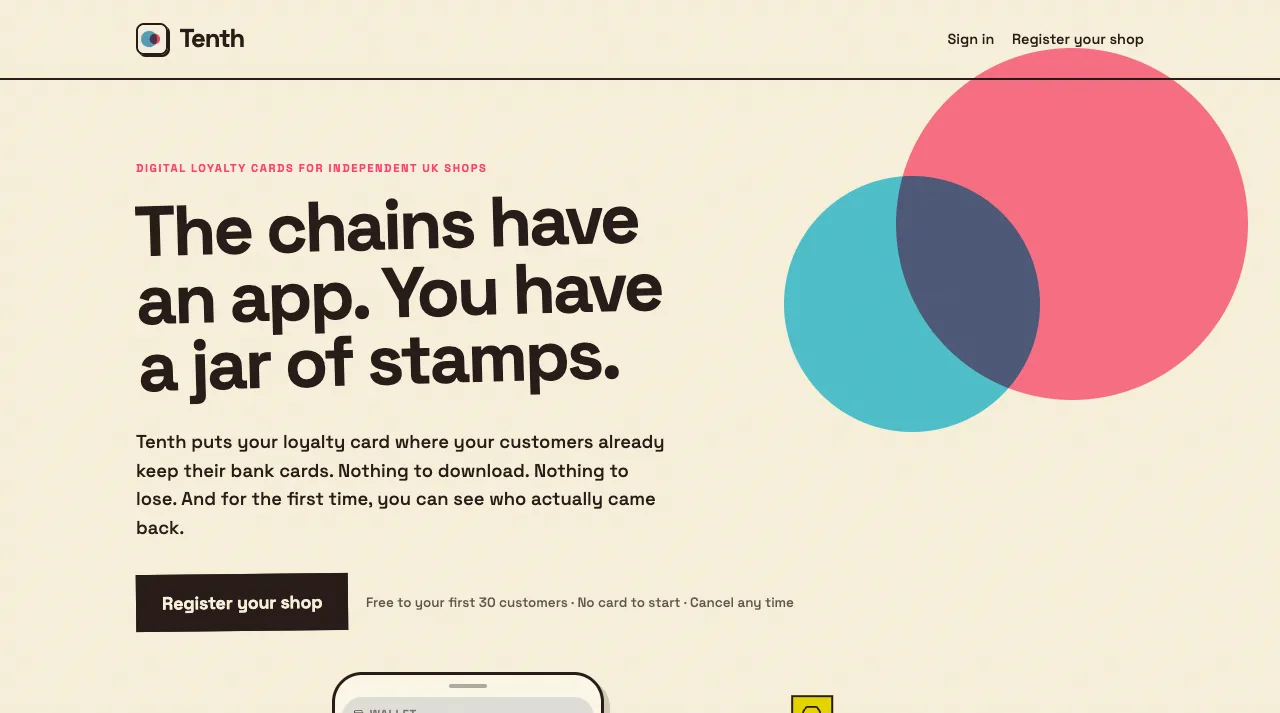
Our own product: loyalty cards for independent UK shops that live in Apple and Google Wallet — no app for the customer, none for the shop.
The brief
Independent shops still run paper stamp cards — coffee is the obvious one, but barbers, nail bars, bakeries and car washes run exactly the same card. The customer leaves it at home, or loses it. The shop is already paying for the free tenth coffee and learns nothing at all in return: not how many people join, not how many come back, not whether the card is worth running.
Tenth is our own product, and the category is crowded — a dozen competitors between £15 and £60 a month. That set the brief more than any feature list did: don’t try to out-feature anyone, and keep the software small enough that one person can run the whole business.
The details
The defining decision was to hold almost nothing about the customer: a card serial number, a stamp log, and no name or email unless they volunteer one. That rules out the pitch every competitor leads with — win back the customers who stopped coming — because with no contact channel there is nothing a shop could do about it. What’s left is duller and actually true: you will know whether your loyalty card is working, and what to change if it isn’t. The data model chose the marketing copy, not the other way round.
Cards can start part-filled, because a 12-stamp card with two already stamped completes far more often than a blank 10 — endowed progress, and one of the few well-evidenced findings in loyalty. It is also the most dangerous setting in the product: configure it the other way and the shop quietly increases its own giveaway cost by 20%. So both setup screens now ask the one question an owner can answer — how many purchases does your paper card need — and the dashboard spells the arithmetic back out in a sentence rather than showing two numbers side by side.
Wallet passes are harder than they look, because a pass does not fetch its own updates: Apple’s devices call your server, so the pass web service, device registrations, and push-as-transport all have to be implemented properly before a stamp can ever appear on a lock screen. The same instinct runs through the rest of the build — the price on the marketing page is read live from Stripe, so the number on the homepage cannot drift away from the number at checkout.
The outcome
Tenth is live at tenthcards.co.uk with self-serve shop registration open, free for a shop’s first 30 customers. The first shops are being signed in person around Kent, but nothing in the product assumes anyone turns up — onboarding, review, and support all work for a shop that has never met us.